In our interconnected world, the exchange of personal data has become commonplace, fueling the rise of surveillance capitalism. From targeted advertisements to invasive tracking, companies like Meta (formerly Facebook) have capitalised on our digital footprints, blurring the lines between privacy and profit. However, as we grapple with the implications of Meta’s “Pay or OK” model, it’s crucial to consider the broader ramifications for individual autonomy and societal values. One may think monetising personal data is a fair exchange for free services and platforms that serve our convenience. Think again!
The perils of surveillance capitalism are starkly illustrated by Eva Vlaar1‘s poignant speech, where she warns of the ease with which our data can be weaponised against us. It fuels a system where corporations track and analyse our behaviour to target us with personalised ads to influence our decisions. But the implications go beyond consumerism. It’s a tool for governments to apply control, as seen in China’s social credit system.
Is it just the governments and public sector exploiting our data for a good cause: national security? Big Tech companies and the primary example, Google, started this off. The concept has moved from simply searching and browsing to connecting on social media platforms like Facebook to be associated with smart devices for cars, TVs, and even washing machines over the years.
Shoshana Zuboff2‘s analysis delves deeper into the commodification of personal experiences, highlighting the inherent imbalance of power in surveillance economies.
Zuboff argues that surveillance capitalism represents a fundamental shift in the relationship between individuals, corporations, and society.
At the core of her critique is “instrumentation society” – a new form of power characterised by the extraction, manipulation, and control of human behaviour for commercial gain. According to Zuboff, surveillance capitalism begins with the illegitimate appropriation of personal experiences and behaviours, transforming them into commodities to be exploited for profit.
Moreover, Zuboff emphasises the unprecedented scale and scope of data collection3 in surveillance capitalism. Digital technologies have enabled companies to amass vast troves of personal information, spanning multiple domains such as online search, social media, and the Internet of Things (IoT). This relentless pursuit of data, driven by the imperatives of profit and power, has blurred the lines of privacy, leaving no sanctuary for individual autonomy or personal freedom.
Central to Zuboff’s critique is the notion that surveillance capitalism is not just about targeted advertising or personalised recommendations; it represents a profound transformation of society. Surveillance capitalists seek to mould us into predictable, controllable entities – mere data points in their quest for profit and power – instrumentation communities by intervening in our actions and shaping our behaviours through targeted interventions and subliminal cues.
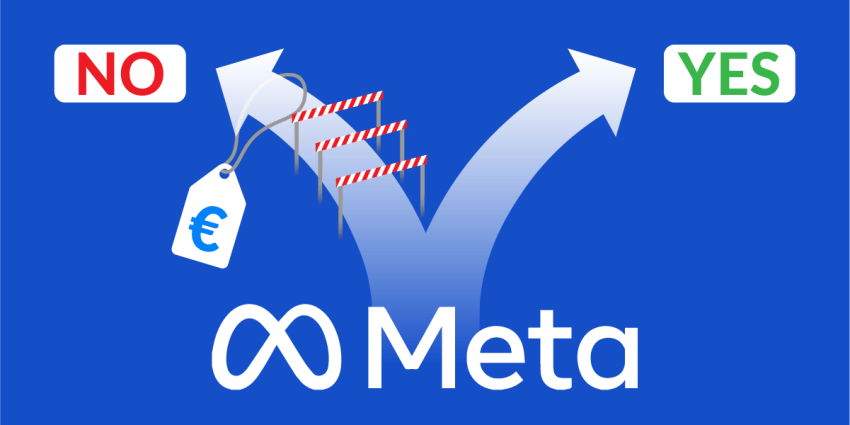
Meta’s introduction of the “Pay or Consent” model epitomises the ethical dilemma inherent in surveillance capitalism. Under this model, users can pay a privacy fee or consent to invasive tracking. However, this approach has drawn criticism from data protection authorities, including the European Union’s General Data Protection Regulation (GDPR), which raises concerns about the user’s lack of choice.
Comments from officials at the International Association of Privacy Professionals (IAPP) underscore the urgency of addressing these challenges. They highlight the potential coercion users face who feel pressured to consent to tracking due to financial constraints, raising fundamental questions about individual autonomy and freedom of choice in the digital age.
I’m deeply concerned that this approach might be passed, and consent might cease to exist with that being the default behaviour.
Zuboff argues that Big Tech companies often offer us products or services that make our lives easier and come across as friendly. However, in reality, they are not. They use these products and services to learn and control our social behaviour without our knowledge or consent. It is unlikely that these companies are solely motivated by our convenience.
In confronting the tyranny of data, it’s imperative to advocate for ethical solutions prioritising individual privacy and agency. My opinion echoes the sentiments of Eva Vlaar, Shoshana Zuboff, and privacy advocates: personal experiences should not be monetised at the expense of human dignity. Our privacy, feelings, emotions, creativity, and experiences are integral to our identity and should be safeguarded accordingly.
As moral consumers, the burden of our digital footprint doesn’t fall on individuals using privacy-friendly apps or blocking ads. Instead, the burden falls on data protection authorities and lawmakers.
Anything made by humans can be unmade by humans. Surveillance capitalism is young, barely 20 years in the making, but human agency is not to be traded or exploited.
Zuboff, S. (2020). You Are Now Remotely Controlled.
Surveillance capitalists are rich and powerful, but they are not invulnerable. They have an Achilles heel: fear. They fear lawmakers who do not fear them. They fear citizens who demand a new road forward as they insist on new answers to old questions: Who will know? Who will decide who knows? Who will decide who decides? Who will write the music, and who will dance?
In conclusion, the Pay Or OK conundrum underscores the urgent need for a paradigm shift in our approach to digital privacy, where individual autonomy is respected, and society’s messy, creative chaos is celebrated rather than commodified.
- Dutch political commentator and television personality. ↩︎
- Shoshana Zuboff (@ShoshanaZuboff) is professor emerita at Harvard Business School and the author of “The Age of Surveillance Capitalism.” ↩︎
- Shoshana Zuboff: Surveillance Capitalism | Future Hindsight S10 E10. (2020). Retrieved from https://www.youtube.com/watch?v=9HNADDl9lto&t=7s&ab_channel=FutureHindsight ↩︎
References:
1- Unpacking Meta’s Pay or Consent Model: Debates, Concerns, and Future Implications. (n.d.). Retrieved from https://secureprivacy.ai/blog/metas-pay-or-consent-model
2- White, A. (2024). Retrieved from https://iapp.org/news/a/privacy-and-adtech-implications-surrounding-metas-pay-or-ok/
3- Radauskas. G (2024). Retrieved from https://cybernews.com/news/meta-privacy-policy-edpb-gdpr/
 Marwa.A.N.
Leave a comment