Historical Roots: Tea’s Journey into Iraqi Culture
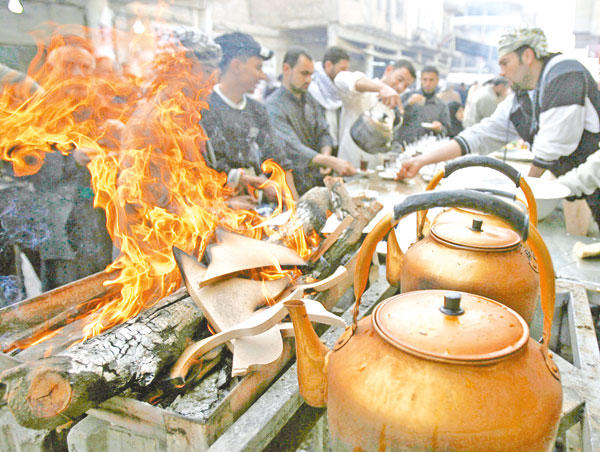
No official circle, street, or even “Darbuna” (meaning an alley, lane, or small street in Iraq) is devoid of a place through the spread of vendors on the sidewalks, in the markets, and in the garages of travel buses between… The Iraqi provinces and cities have small shops selling tea, and street vendors abound in crowded places, such as squares, big markets, and shrines. Iraqis are also accustomed to drinking tea after any meal, no matter how simple, and it is a habit they learned from the British occupation in 1914. At that time, it was one of the herbalists in the Al-Haidarkhana area overlooking Al-Rashid Street. It is said that the first person to drink tea in Iraq was the Ottoman governor Medhat Pasha in 1870, when coffee was widespread at that time, and that is why the cafes were called “Gahawi.” When tea spread and replaced coffee, the cafe became called “Chai Khana.” The colour is almost black – or tookh. Iraqi families often gather around the tea tray or “samovar” where the tea holders rotate, and the hot water containers, i.e. the “kettle” or flask, and the teapots rotate. And the sugar holder, or as it is called in Iraq, “Shakardan”.
The Significance of “Istakan”
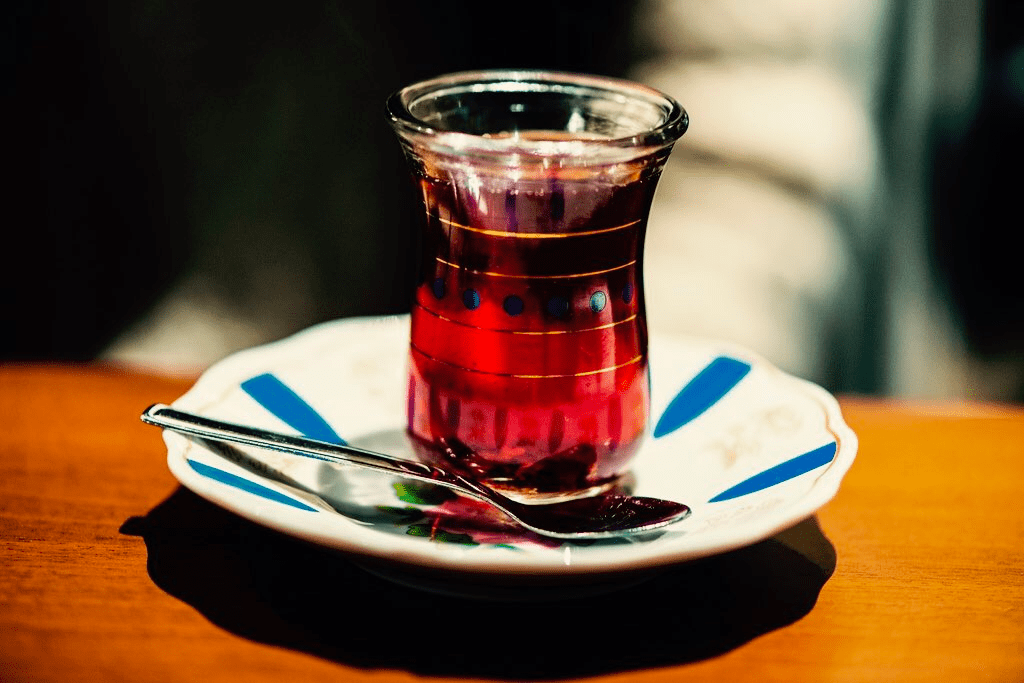
The word “Istakan” is of English origin, as the British soldiers who were in India during the British colonization of the Indian subcontinent, when they returned home, would take with them the Indian “tea piala” as the Indians call it, meaning a cup of tea, and because the English used to drink tea with a “cup”, which is a large glass cup placed on a plate. They called the cup “Istakan” to distinguish it from English. It is a name made up of three syllables that explains the origin of the pot or mug: East – Tea – Can A vessel (East-tea-can), meaning the Eastern tea cup, and so the English soldiers brought this word with them to Iraq, and because everything related to tea was new. The Iraqis took the word “Istakan” as a connected syllable for ease and connotation.
Etiquette and Customs of Tea Serving
Although a variety of different forms appear. It is noteworthy that there are several ways to prepare tea and boil its water, the best of which is always preparing tea over a charcoal fire instead of kerosene, gas, or electricity. Preparing tea is called “dumping the tea,” meaning boiling and cooking it until it is fragrant. This is where the song “Khadri Al-Chai” came from. “Khadri” and charcoal tea indicate authenticity and taste and are preferred, as is tannour bread.
Cultural Practices and Traditions in Some Areas of Iraq
Drinking tea from tea bags like “Abul Khait tea” is unacceptable in some areas. Instead, people prefer to drink coarse Ceylon tea with a pleasant aroma. Some people like to add aromatic substances like cardamom or mint to their tea.
Interpreting the Number of “Khashougas”
One of rural Iraq’s most important customs is filling the teacup to the brim. Failing to do so can offend the guest, which may be interpreted as a sign of weakness. Another custom is to not place the “Khashouga” spoon, a Turkish-Persian word, in the teacup. Instead, it should be placed in the tea dish where the tea holder is served. Placing the spoon in the cup can be seen as an insult to a person’s honour and may lead to a conflict that’s difficult to resolve.
One of my favourite moments is witnessing a man’s grin when he gets two khashougas, which would mean he’s in for twice the trouble – and potentially twice the love, i.e. marrying two women.
Geertzian Perspective: Thick Description and Cultural Interpretation
Clifford Geertz, a prominent anthropologist, introduced the concept of “thick description” as a method for understanding the intricacies of culture. According to Geertz, culture is not just a set of behaviours or symbols but a complex system of meanings embedded within social practices.
Thick description involves going beyond surface observations and delving into the deeper layers of meaning within cultural phenomena. It requires the anthropologist, or in this case, the cultural interpreter, to immerse themselves in the cultural context, paying attention to the nuances of language, gestures, rituals, and symbols. So, in this context, it doesn’t mean anything to put a spoon inside or not fill the cup to the maximum while it raises a fight in some districts in Iraq.
Geertz’s approach to thick description in Iraqi tea culture offers valuable insights into the significance of seemingly mundane practices such as tea serving etiquette. By closely examining the social norms surrounding tea drinking, including the proper use of utensils and the symbolism of tea preparation, one can peel layers of meaning that may not be immediately apparent to an outsider.
For example, not filling a guest’s teacup to the maximum may seem trivial on the surface, but within Iraqi culture, it carries significant implications for hospitality and social status. Similarly, placing the “khashouga” spoon takes on symbolic significance, reflecting notions of honour and respect.
Geertz’s concept of thick description reminds us that culture is not static but dynamic, constantly evolving in response to social, historical, and political forces. By employing this approach, cultural interpreters can gain a deeper understanding of the complexities of Iraqi tea culture and its broader significance within society.
Geertz’s emphasis on thick description encourages us to look beyond the surface and appreciate the richness and depth of cultural practices, allowing for a more nuanced interpretation of social phenomena.
 Marwa.A.N.
Leave a comment