PillowTalk Podcast
Ideation and Initial Meetings
Our journey began with collaborative brainstorming sessions, where we discussed project requirements, assessed individual skills, and explored potential podcast topics based on the course curriculum.
Outcomes
- Topics: Fake Authenticity theory, Living in the margins, Online identities, and Cultural encounters with celebrities.
- Digital Artefact type: Podcast
- Digital Channel name: PillowTalk
- Key decisions regarding roles: Shahed researched and wrote the script, while Anushka co-wrote it with her. Both Shahed and Anushka were assigned hosts after they had written the script. Naomi handled the editing—Marwa was in charge of lighting and sounds and assisted Naomi when needed.
Topic Selection and Early Planning
After consideration, we settled on the “Authenticity” theme, reflecting contemporary concerns about digital influences on youth behaviour. The authenticity theme was chosen for its relevance to navigating identity in the digital age, addressing societal concerns around curated personas and online influences. This topic aligns with personal experiences and interests, delving into pressures to conform, the search for genuine connections, and the impact of digital personas on individual Authenticity. Exploring these dynamics offers valuable insights into modern identity challenges and societal shifts in the digital era.
Pre-Production and Detailed Planning
In subsequent meetings, we delved into the specifics of each episode under the theme of “Authenticity”.
January 31st meetup
Met in person at Uni to talk more in-depth about who does what regarding the three episodes’ topics under the theme of Authenticity:
Episode 1: Behind the Spotlight: Navigating Authenticity in the Celebrity World
Episode 2: Unmasking Social Media Influencers: The Quest for Authenticity
Episode 3: Mirror, Mirror: Self-Reflection in the Age of Online Presence
February 12th meetup
We discussed the episode’s themes and brainstormed relatable stories for each. The deadline was set to drop in the scripts by the EOD of February 13th. Filming would be done the following Wednesday, February 14th. Each one of us would be looking at finding a suitable live 4k background for our greenscreen to be shared max in the next day.
Background chosen: is one of the ones I proposed.
Tuesday, February 13th meetup
Shahed and Anushka shared scripts for all three episodes. While Shahed’s script sounded a bit more creative and casual, Anushka’s sounded more formal. We all agreed to consider both options and find a middle ground to produce one that sets a tone suitable for PillowTalk.
Technical Setup and Shoot Preparation
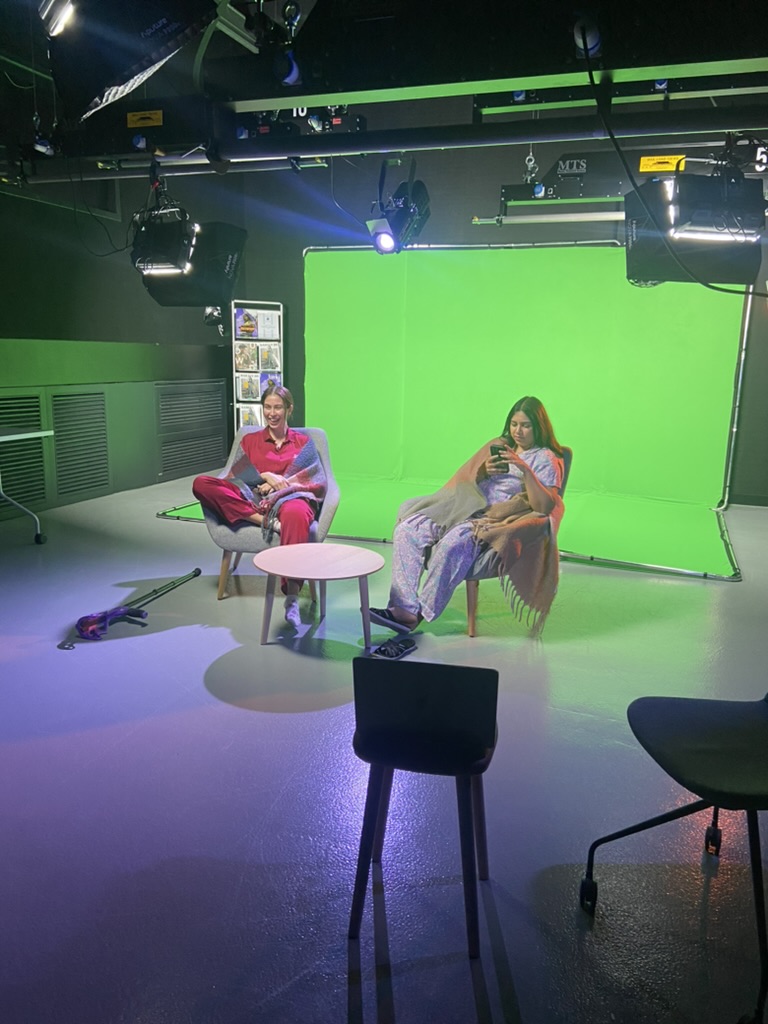
Before the shoot, we focused on setting up equipment, selecting appropriate green screen backgrounds, and fine-tuning logistical aspects. We decided to select a green screen background that complements the podcast’s theme and the hosts’ PJ style. We also created a checklist that includes clothing and props that need to be checked off before the shoot day. The plan was to record all three episodes in one day.
Shoot Day and Production
On the day of the shoot, we ensured everything was set up optimally for recording, including the lighting, sound, and seating arrangements. Initially, I assisted in setting up the lighting and followed Daniel’s, the Cinematographer’s, advice and guidance to set up the correct ambient lighting. We set up white lights to match the window and orange lights in the corners to replicate the background candle lights. After that, I was responsible for the sound. The studio has microphones designed for podcast setups but decided not to use them because placing them on a low coffee table would not look good on full screen. Instead, we used the Lavalier microphone.


Post-Production and Editing
During the post-production and editing phase, Naiomi was assigned as the editor. However, she regularly checked in with us to update us on the progress of each episode. We all provided feedback, including subtitles (I did the second and third episodes), the YouTube channel description, the episode description, and feedback on the look and feel of the graphical elements.
Collaboration on the product during this phase was challenging. Naiomi needed help editing the second episode but was hesitant to share the source files. She worried that the files might get damaged or things would become disorganized. However, it is important to understand that this way of thinking only hinders progress and prevents the product from completion. Trust and collaboration are key in any phase of teamwork.
Lessons Learned and Future Directions
Reflecting on our experience, we identified key lessons learned and areas for improvement in future projects:
Things I would redo/retake after production:
- Seating posture: If we were to reshoot the scene, I suggest adjusting the host’s seating posture for a more engaging on-screen presence.
- Gestural communication: If we were to reshoot the scene, I suggest asking the host to minimize unnecessary hand gestures to facilitate better control over the green screen during editing.
- Minimizing filler words: If we could reshoot the scene, I’d ask the hosts to limit the use of filler words such as ‘like,’ ‘you know,’ ‘well,’ ‘actually,’ and ‘really’ to improve the clarity and flow of the conversation.
- Font and Design Consistency: One aspect to reconsider is the font used for the outro and video outlines, as it doesn’t align with our intended theme. The current font may be more suitable for younger audiences, animation, or gaming content, but it doesn’t fully resonate with the podcast’s tone and message.
- Emblem and Logo Alignment: Another area for improvement is ensuring consistency between the hosts’ emblem design and the overall logo presentation. Maintaining a cohesive brand image is essential; in this case, using different logos in videos and on the YouTube channel may create a disconnect. Staying consistent with emblem usage can strengthen the brand identity and message across all platforms.
Our journey in creating the PillowTalk podcast has been enlightening. It was my first experience using a studio camera, setting up lights and sound for a show, and assisting in producing not just one clip but three. I’m grateful for the opportunity to work with this team, discussing how crucial it is to stay true to ourselves while unlocking new skills.
What Is PillowTalk Podcast About?
In our podcast, PillowTalk, we aim to explore the intricate dynamics of authenticity in the digital age, particularly focusing on influencers, celebrities, and the journey to staying true to oneself online. Through candid discussions and insightful rants, we’ll delve deep into the challenges and triumphs of maintaining authenticity in a world where image and perception often dominate. We tackle topics such as the pressures to conform to societal norms, the impact of celebrity personas on audiences, and the quest for genuine connection and authenticity amidst social media noise. Join us as we navigate the complexities of being authentic in the digital realm and uncover strategies for embracing our true selves online.
 Marwa.A.N.
Leave a comment