How AlHurra and Radio Sawa Acted as Apparatuses of State Ideology in Iraq
In early 2002, after 9/11, traumatized America was set on dominating the world using hard power, bombs and military force, and its soft ones, broadcasts, such as Voice of America Arabic.
The Bush administration decided to replace the federally-run Arabic radio and its tone of voice with a more “hip” Radio Sawa, translating to Together in Arabic, broadcasting to selected countries in the Middle East, with a mission that “tackles topics not found in other media outlets” and “connects with Arab audiences.”. In other words, sugarcoat America’s image in the MENA region’s eyes. Whose popular songs on FM, more than its news bulletins, won a lot of following among young Arab listeners. It only seemed natural to target the young generation, forming ideations and beliefs. At the time, as an Iraqi citizen who witnessed the rise of this radio station, I didn’t realize why they used to blend Arabic pop music, fashion, and cooking shows with news. Yet, it only made sense since they were trying to balance the amount of propagated knowledge they were trying to feed the Iraqi people slowly.
A year later, the same Radio Sawa team was tasked with launching an Arabic satellite TV: Alhurra, Arabic for the free one, which went on the air in February 2004.
Rough start
Establishing a media institution only to broadcast the colonized side of the story and impose their agenda was one of the U.S. government’s first steps after the U.S. invasion in 2003. Wiring their listeners to believe what had been done was justified by all means possible. Ironically, but not surprisingly, it is only funded by the U.S. government and barred from broadcasting within the United States under the 1948 Smith-Mundt Act. In fact, leading to its launch, many Arabs in the media called out for a boycott of the channel.

Skeptical audience
AlHurra was in for a big competition in the satellite TV stage, and Arab viewers resorted to alternative sources of regional networks, primarily AlJazeera, AlArabiya, and other local-run networks and channels. AlHurra had a long way to stand out and win more views. It is hard to gain the credibility of the people of the region, knowing that this news channel is airing content funded by a government colonized and claiming to free them while having trouble fathoming the tortured prisoners crimes of Abu Gharib, supporting repression, violence and authority contradicting the values they hold dear to their hearts; values of human rights, freedom and democracy that the U.S. claims to promote through Alhurra.
Additionally, the situation was exacerbated by the station’s inaugural broadcast, which featured an interview with President Bush concluding with his congratulatory remarks to Alhurra’s network news director, Mouafac Harb. For Arab audiences accustomed to orchestrated interviews with Arab leaders on state-controlled television, Bush’s praise appeared to validate Alhurra’s portrayal as a propaganda outlet.
Many questioned its niche and unique message for several reasons throughout the years: out-of-schedule programming and the lack of scoops, among many that could serve the U.S. goals in this outlet. The Iraqi people do not rely on getting this channel’s latest and most trusted scope.
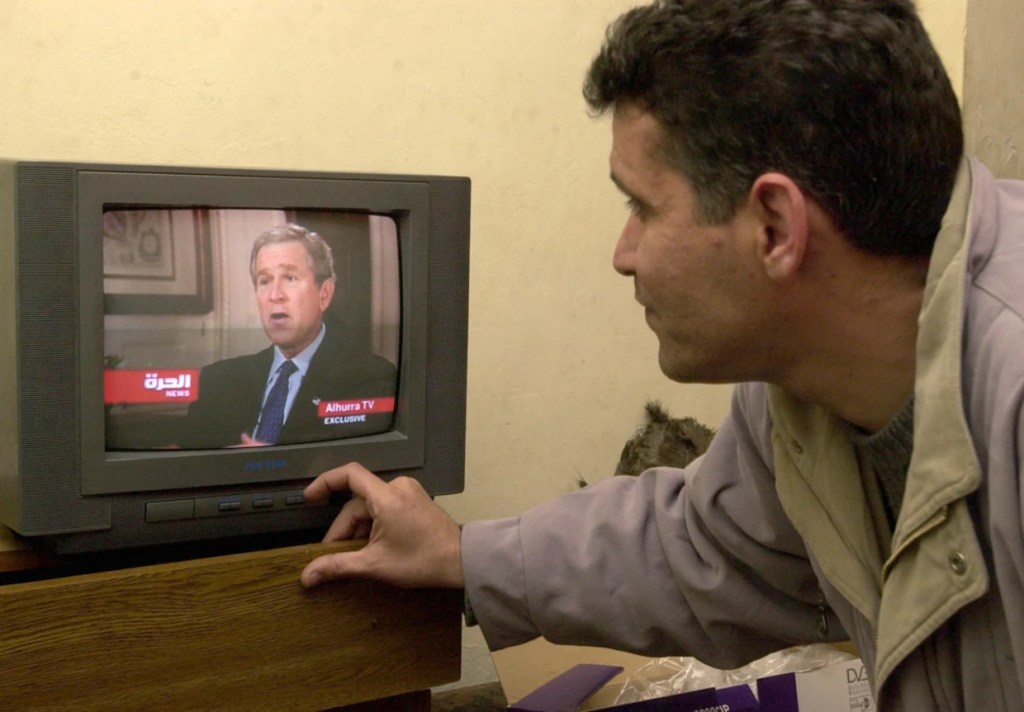
Alhurra and Radio Sawa, U.S. government-funded media outlets established in the post-9/11 era, exemplify Louis Althusser’s concept of Ideological State Apparatuses (ISAs). These outlets served as ideological control and influence instruments in the Middle East by disseminating the dominant U.S. government perspective. They propagated the ideology of the U.S. as a liberator and promoter of democracy. Alhurra and Radio Sawa integrated local cultural and social norms into their content to make their messages appealing. I remember questioning as a teenager why Radio Sawa would broadcast Nancy Ajram or Fadil Shakir songs after the news! However, the U.S. government’s attempt to shape the perceptions and beliefs of the Middle Eastern audience was met with resistance and scepticism, highlighting the limitations of ISAs. This case demonstrates how media outlets can function as ISAs by promoting dominant ideologies and values while facing challenges in shaping the beliefs of their target audience.
 Marwa.A.N.
Leave a comment